AFTER THE GAVEL: Inside the Karmelo Anthony Appeal— No. 1: What The Docket Shows
A Father’s Words and a Docket That Raises More Questions Than the Verdict Answered

About This Series:
After The Gavel: Inside the Karmelo Anthony Appeal is a document-driven series by The Docket Diva tracking the post-conviction fight for Karmelo Anthony, sentenced to 35 years in TDCJ for the April 2025 killing of Austin Metcalf. Collin County denied The Docket Diva, a credentialed journalist, access to that courtroom along with other independent press. So we went to the docket instead, and what those records show is a story nobody else is telling.
Andrew Anthony’s first thought when the verdict was read was not about lawyers or appeals or next steps. He told the world exactly what it was. “I failed my son.” And while the cameras were still rolling and everybody else was breaking down the verdict, The Docket Diva was doing what we do best, docket-diving Case No. 296-83565-2025. What those records show in the 48 hours since that gavel fell is a story nobody else is telling.
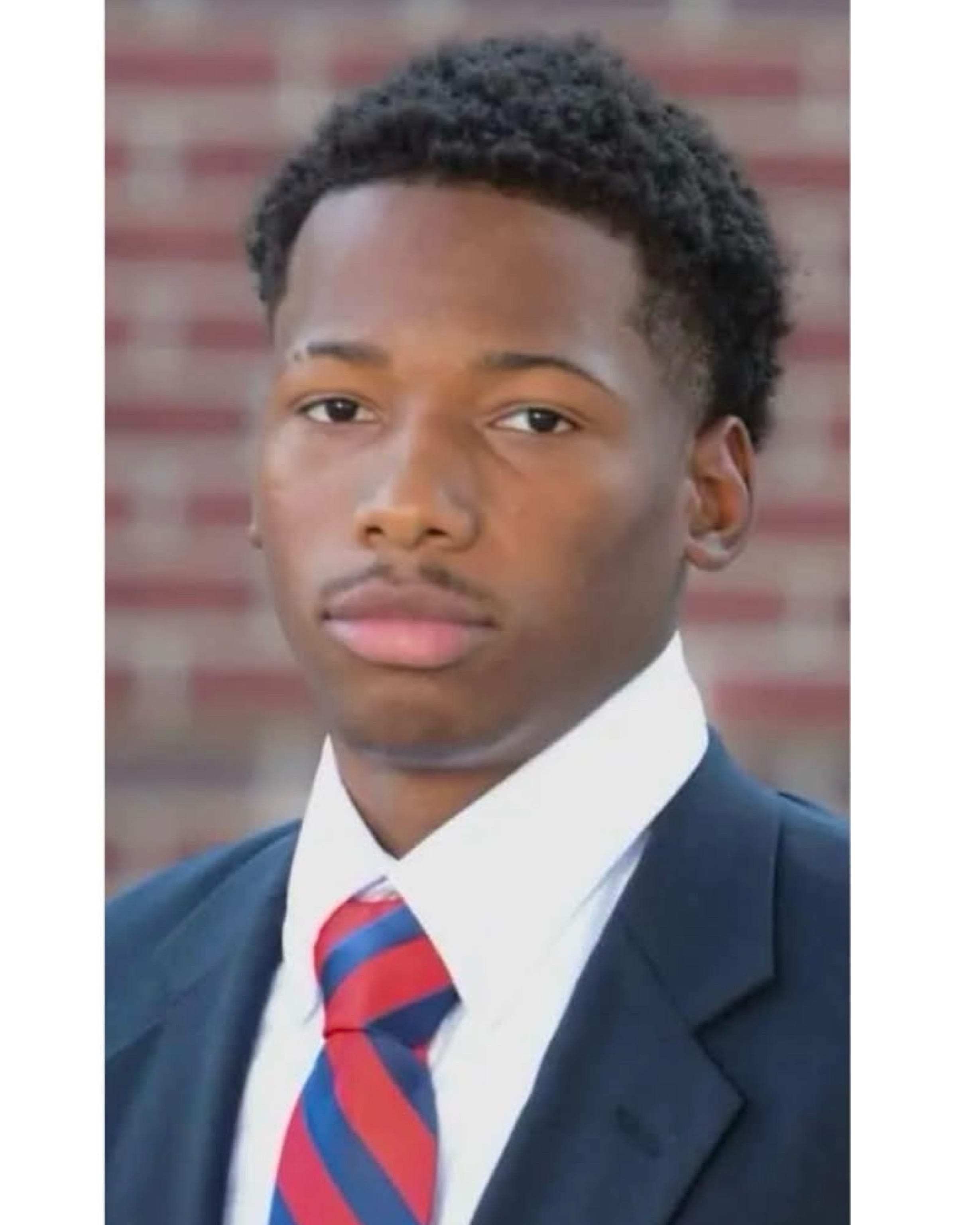
He didn’t fail his son, but that is what this system made him feel, and that feeling is the most honest summary of what happened in that Collin County courtroom over the last two weeks of a father’s life that anyone has offered publicly.
Collin County locked The Docket Diva out of that courtroom along with other independent journalists during this trial. It didn’t matter, because the docket doesn’t require a press credential and it doesn’t lie. What it shows about the days before, during, and after this verdict is more revealing than anything that could have been observed from a media pool seat.
Karmelo Anthony, who was 17 when he killed Austin Metcalf at a Frisco track meet in April 2025, is now 19 and sitting in the Texas Department of Criminal Justice with a 35-year sentence and 12 days of back time credit. In less than 48 hours, he moved from a courtroom to a county jail cell to a state prison, surrounded by men twice his age and twice his size, beginning what will be the longest chapter of his young life. His father is on the outside carrying a grief that has nothing to do with guilt and everything to do with love.
Anyone watching only the courtroom missed what was already happening on the docket, and anyone listening only to legal analysts missed what this family was saying out loud in the aftermath.
The Family Speaks
In an interview following the verdict, the Anthony family was direct about where things stand. They are seeking new counsel for the appeal, and after the verdict came down, his attorneys gave the family a corporate answer, the kind of response that tells you everything about how a relationship has deteriorated without actually saying anything of substance at all.

There were things the family believed going into that courtroom that the verdict forced them to confront in the hardest possible way. The possibility of Karmelo taking the stand was never discussed with them. They believed the jury would see through what they felt were clear inconsistencies in the witnesses’ testimony, and they extended real faith to a process they hoped would be fair. While they had genuine reservations about a jury with no Black representation, they made a conscious decision to trust the system, to extend faith to a process that did not extend it back. The outcome handed to them on June 9th was not one they saw coming, and the silence from their own legal team in the aftermath only deepened a wound that was already profound.
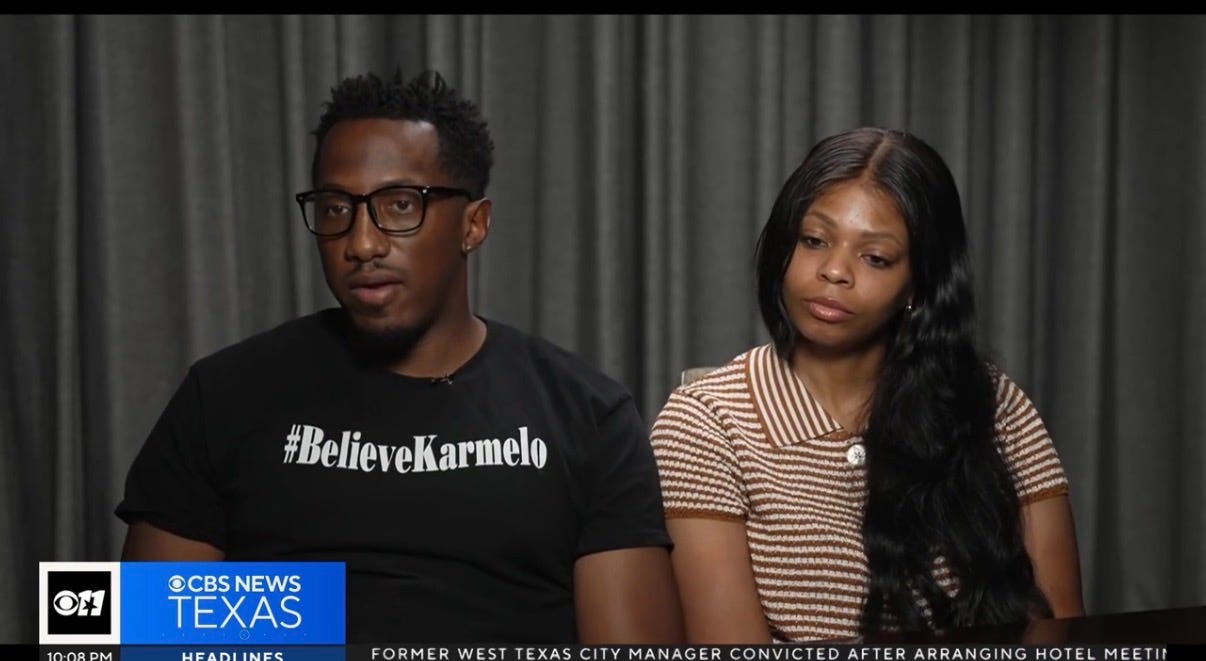
Andrew Anthony told the world what his first thought was when that verdict was read. In his own words: “I failed my son,” during an interview with MimiBrown TV of The Breakfast Club. This is the real story behind every docket entry and every appellate filing that The Docket Diva will be tracking from here.
The Appeal Is Already Filed
On June 10, 2026, less than 24 hours after sentencing, a Notice of Appeal and Pauper Oath appeared on the Register of Actions for Case No. 296-83565-2025. The Pauper Oath is the detail that demands attention, because it signals that the Anthony family is asking the court to appoint appellate counsel on the grounds that they cannot afford to retain one privately. The TFDA Indigent Packet filed that same day confirms that Karmelo has been deemed Attorney Appointment Eligible for purposes of the appeal.
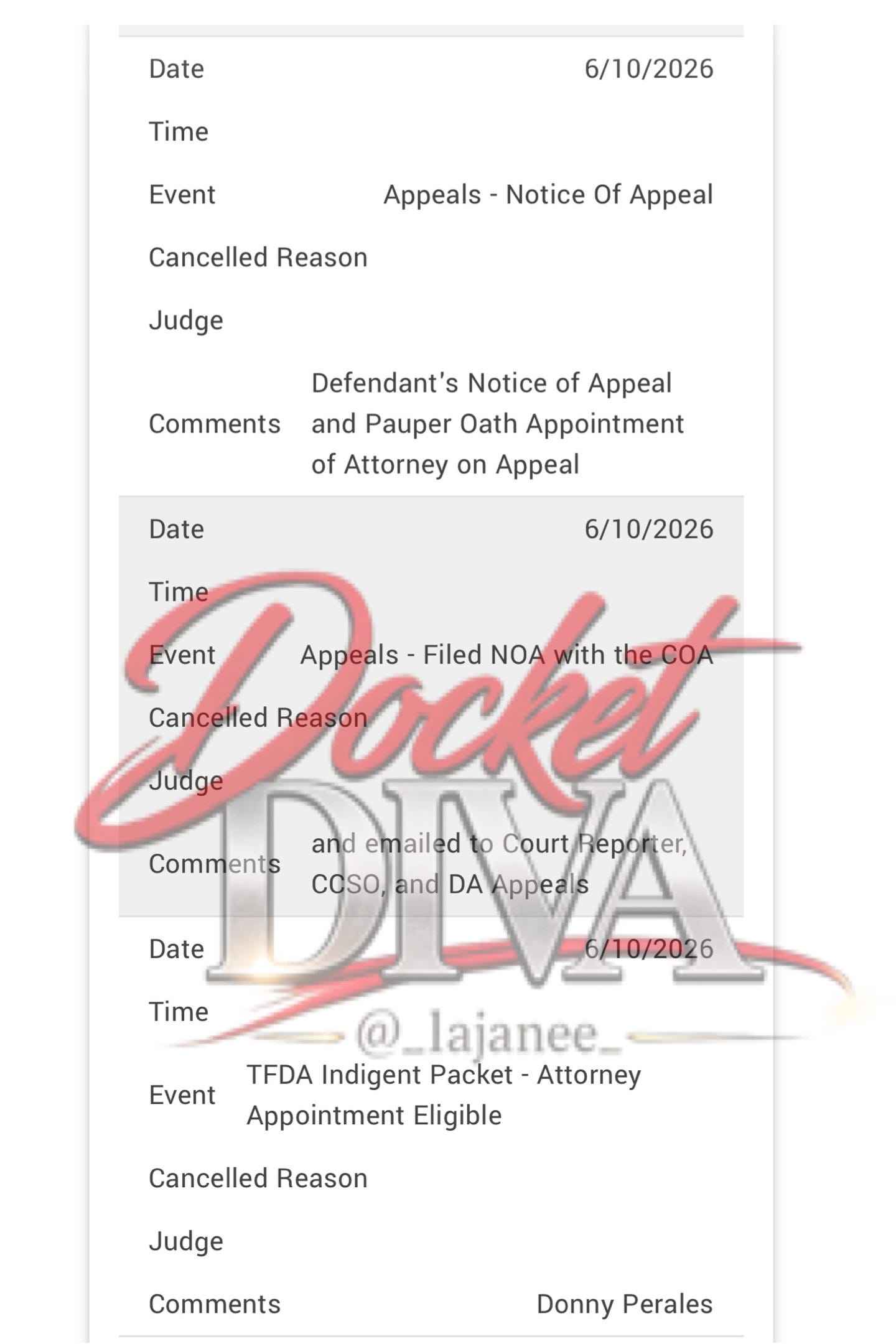
It is worth noting that this is not the first time the family has asked the court for assistance. The original docket reflects an indigent packet filed early in the case as well, and yet the family went on to retain Mike Howard privately. Whether that same path is possible or sustainable for an appeal that could stretch three years is a question only the Anthony family can answer, but the filing on June 10th suggests the calculus has changed.
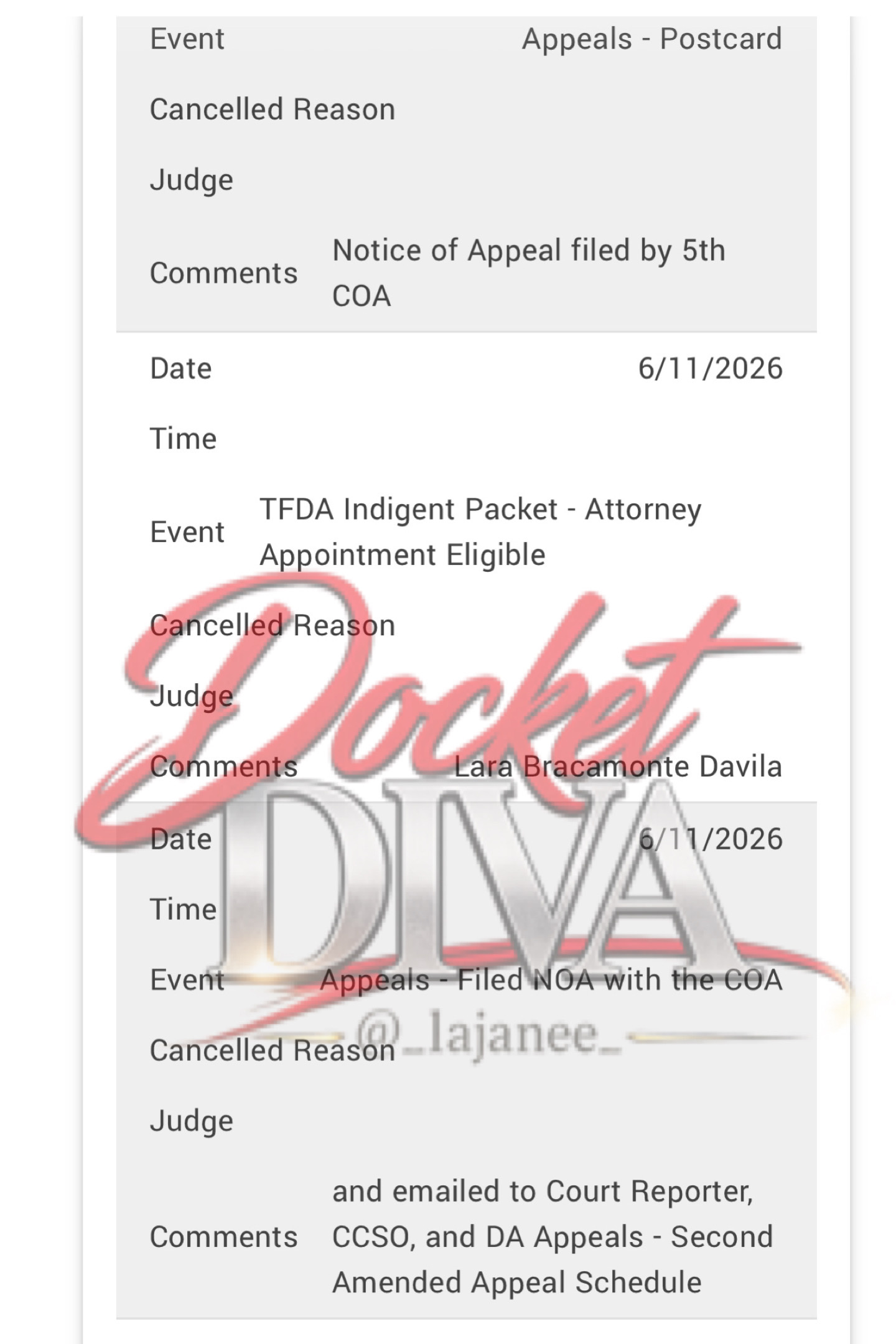
The family that retained Mike Howard as private trial counsel made the decision within hours of that verdict to seek state-appointed representation going forward. Whatever that reflects about available resources, about the relationship with Howard after that corporate answer, or about the strategic calculation of who should carry this case into an appellate court, that decision was made quickly and it is now part of the official record.
The Peremptory Strike Question
Also appearing on the June 10th docket is a formal entry for Peremptory Challenges, which means this issue has been preserved for appellate review. As The Docket Diva reported during jury selection, three Black jurors who had been deemed qualified for service were struck from this panel by the prosecution, and all three of those jurors shared the same profession as teachers.
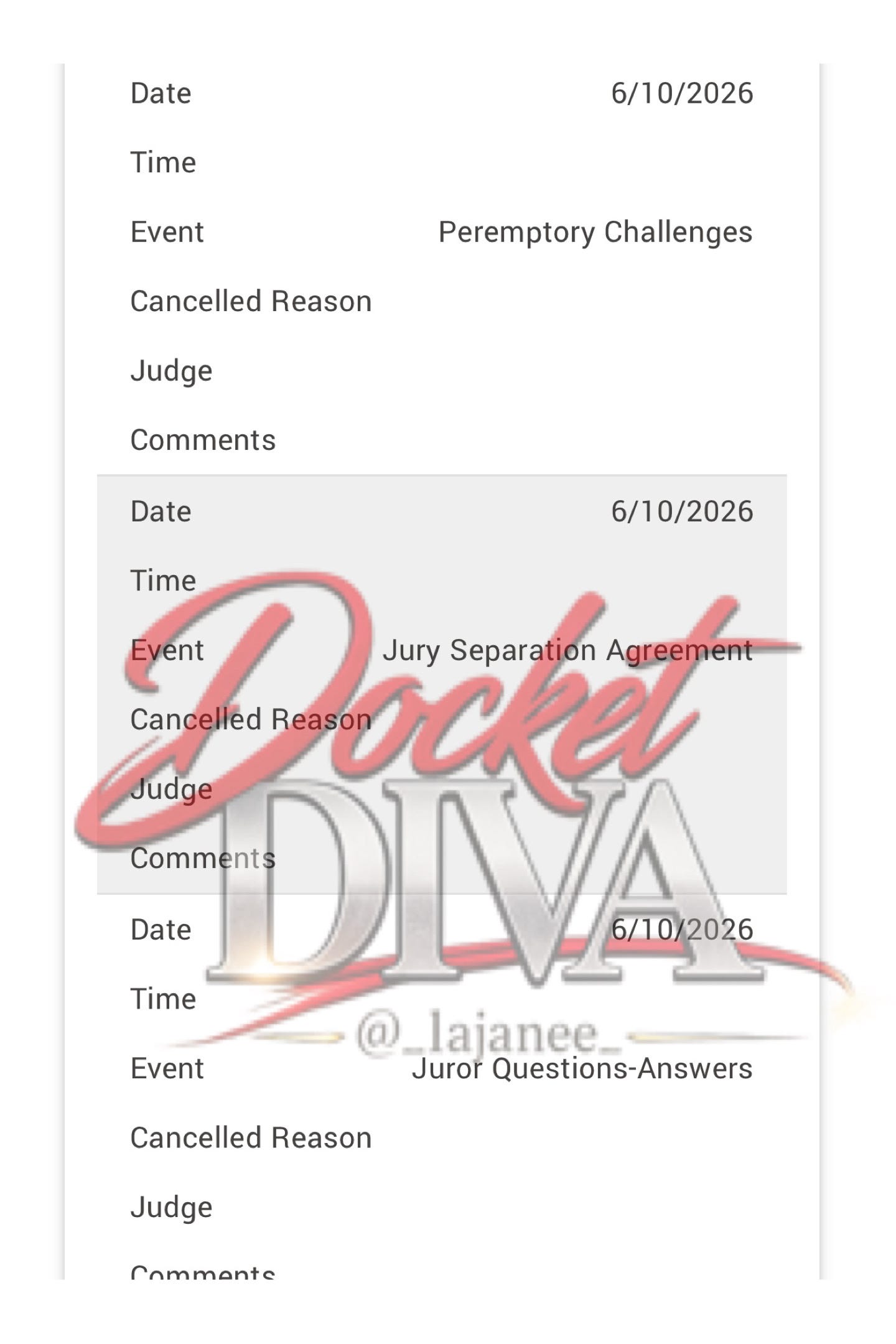
The family’s discomfort with the composition of that jury was not unfounded, and it was not simply emotional. Under Batson v. Kentucky, the prosecution is prohibited from using peremptory strikes to remove jurors on the basis of race alone. When a pattern emerges, the burden shifts to the prosecution to offer a race-neutral explanation that holds up under judicial scrutiny. The appellate question is whether striking three Black qualified jurors who all happened to share the same profession constitutes a recognizable pattern, and whether the explanations offered at the time were sufficient to satisfy that standard. The family paused at that jury and chose to trust the system anyway, and the appellate court will now have to examine whether that trust was asked of them under constitutionally compromised circumstances.
What The Jury Was Actually Thinking
Something else appeared on the June 10th docket that has received no attention at all. Juror Questions-Answers is listed as a formal entry, meaning jurors submitted written questions during the course of this trial and those questions along with their answers are now part of the official record.
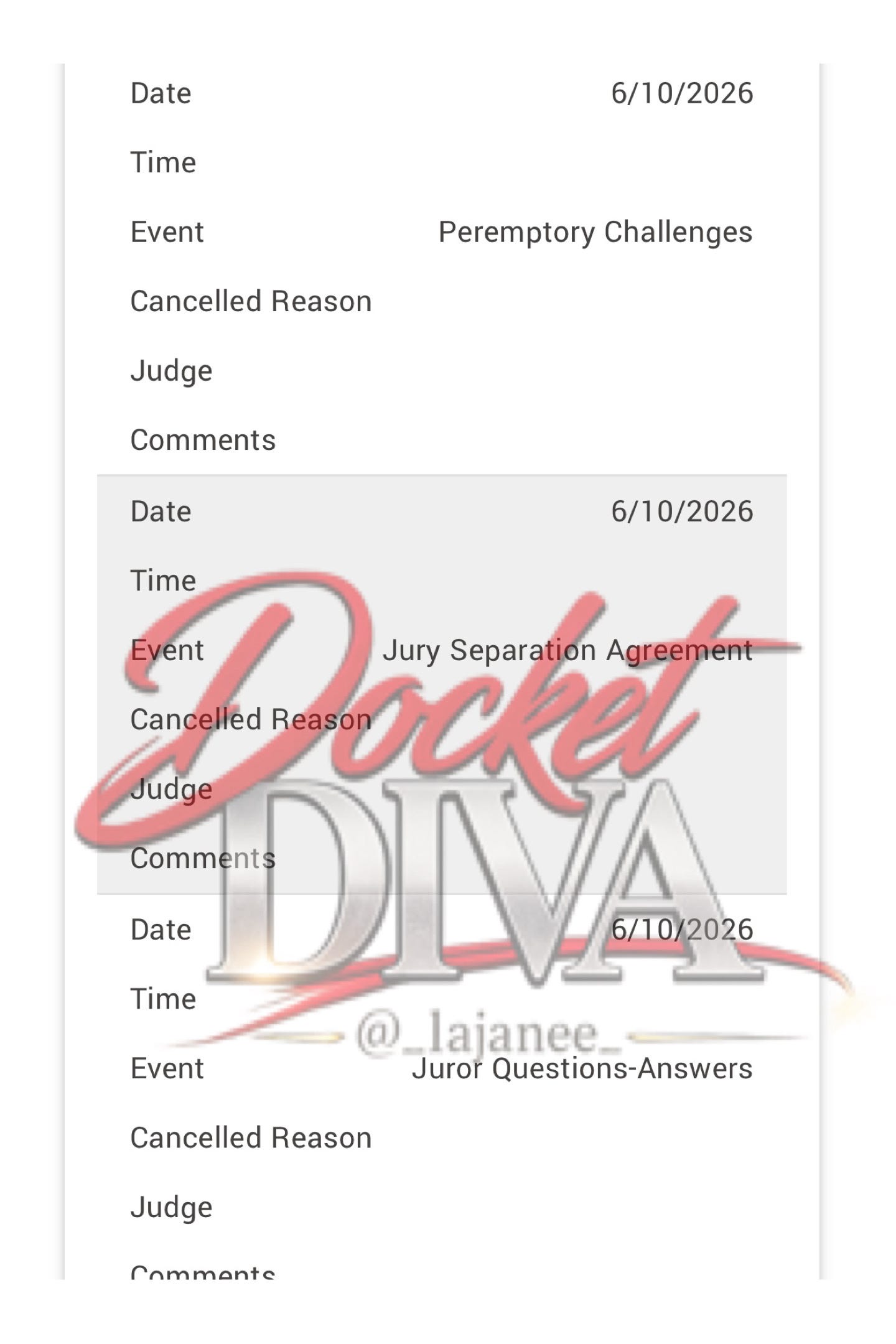
This matters enormously for the appeal because written juror questions reveal what the jury was actually wrestling with during deliberations, what confused them, what they needed clarification on, and potentially what tipped the scales when they went behind closed doors. They are a window into the jury’s thinking that closing arguments and verdict forms simply cannot provide, and once those questions become accessible they will be essential reading for anyone trying to understand how this jury arrived at 35 years for a teenager who claimed he acted in self defense.
The Subpoena Question That Has Received Almost No Attention
What the docket shows about the pretrial period is something that has gone largely unexamined in the coverage of this case, and it deserves a much closer look now that the verdict is in.
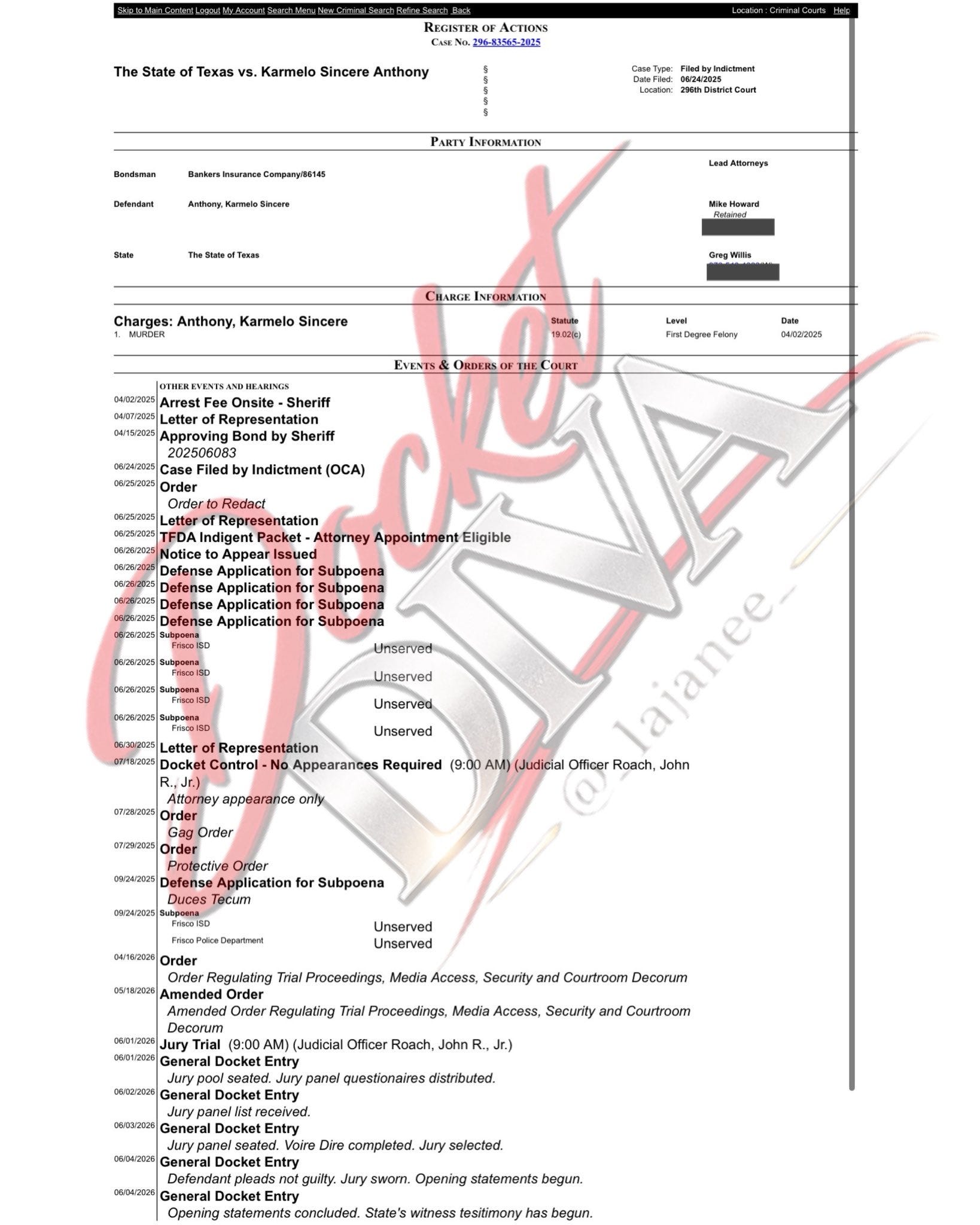
Between June and September 2025, the defense filed multiple subpoena applications targeting Frisco ISD specifically. Four of those applications were filed on the same day in June 2025, and all four were returned unserved, meaning Frisco ISD did not comply. By September 2025, the defense escalated by filing a Duces Tecum subpoena naming both Frisco ISD and the Frisco Police Department as targets, and both of those also came back unserved.
A Duces Tecum is not a standard witness subpoena. It is a legal demand for the production of physical documents and records, and it signals that the defense was trying to obtain something specific and tangible from that school district across multiple attempts spanning several months. Six subpoena attempts targeting the same institution, all returning without compliance, is a pattern that sits quietly in this docket and has never been publicly addressed.
What the defense was seeking, whether those records were ever produced through alternative channels, whether the prosecution had independent access to them and disclosed them separately, and whether any of that material ever reached the jury are questions this docket raises without answering. That unresolved gap between what was sought and what was obtained is exactly the kind of issue a carefully constructed appeal will need to examine, particularly given that the family already believes critical strategic decisions were made without their knowledge or input.
The Docket Keeps Moving
The trial court docket did not go quiet after sentencing, and The Docket Diva has been watching it in real time. On June 10th, the appeal schedule was filed and transmitted to the Court Reporter, the Collin County Sheriff’s Office, and the DA’s Appeals division. The Court Reporter’s copy matters most in the immediate term because they are now on the clock to prepare the complete trial transcript, which becomes the foundation of everything the appellate court will review.
By June 11th, three more entries had appeared. The 5th Court of Appeals issued a postcard confirming formal receipt of the Notice of Appeal, which is the official handoff from the trial court to the appellate court. A name appeared in the comments of the TFDA Indigent Packet entry, Lara Bracamonte Davila, listed in connection with the Attorney Appointment Eligible designation. And a Second Amended Appeal Schedule was filed and transmitted, meaning the schedule governing deadlines for all parties has already been adjusted twice in two days.
The appeal schedule being amended once each day since the verdict likely reflects the picture of appellate representation coming into focus in real time. The first schedule may have been filed before counsel was identified, and the second amendment may reflect Bracamonte Davila’s involvement changing something about the timeline or the routing of documents. What specifically changed between the two versions is not visible from the docket entries alone, but the pace of activity in the 48 hours since this verdict is notable regardless.
What The Road Ahead Actually Looks Like
If the indigency application is granted, an appointed appellate attorney will receive the complete trial record, including every subpoena application, every unserved return, every pretrial motion, every juror question, and every ruling made by Judge John R. Roach Jr. throughout these proceedings. Also filed on June 10th is a Supplemental Notice of Media Attendance and Request for Post Trial Exhibits, meaning someone has already formally requested access to the exhibits used at trial, and if those are released they become primary source material for every question this verdict has left unanswered.
Texas appellate timelines are not short, and cases of this complexity routinely take between 18 months and three years to work through the appellate courts. Karmelo Anthony will remain in TDCJ during the entirety of that process, a young man who was a teenager when this began, growing older inside a system his father already tried once to trust on his behalf.
Collin County may have kept The Docket Diva out of that courtroom, but they cannot keep us off this docket. Andrew Anthony said “I failed my son,” and what the Register of Actions shows is that there are still questions about this case that have not been answered. The legal process that will determine whether Karmelo Anthony spends the next 35 years in prison is only just beginning, and The Docket Diva will be on every filing as this appeal moves forward.
About The Author:
La’Janeé Alford, known as The Docket Diva, is an independent legal media journalist covering high-profile criminal cases at the intersection of hip-hop culture and the law. She popularized the practice of docket diving, pulling and explaining primary court documents in real time for audiences who deserve to understand the legal system as it actually works. Her coverage has generated more than 30 million combined impressions and has been amplified by Charlamagne Tha God, Don Cheadle, Essence, TheGrio, and more. Follow her coverage at docketdiva.substack.com and Facebook: La’Janeé, The Docket Diva.